 Mark Agnew
 In the Arctic, we needed resilience to overcome adversity.
Resilience training for teams and strategies for overcoming adversity has never been more important
Building resilience in corporate teams is important because it gives you a competitive advantage, particularly during difficult times. It has been studied and measured, showing resilient managers and teams thrive in adversity, while others merely survive, or worse, crumble.
There is also lower staff turnover in resilient teams and a greater emphasis on problem solving, which saves your company time and money in the long run. What's more, resilient people are more fulfilled at work as they are likely to focus on the inherent joy of their job, rather than basing their moods on external outcomes.
Resilient strategies will foster this thriving culture. In fact, resilience doesn't just happen on it's own - building resilience is about training, culture and teamwork in challenging times.
Why resilience is important for corporate teams
Resilience training for teams has never been more important. We are in a time of great change - AI, political uncertainty and how it will effect the economy, plus unprecedent working from home arrangements. This degree of flux can be stressful, the uncertain future requires resilience.
We can look to other times of change for lessons in resilience. In the 1970s and 80s, the telecommunications industry experienced rapid change. As a result, there was massive downsizing. An 1981 study followed managers - about two thirds suffered burnout that spilled beyond their work and into their personal lives. There was an increase in divorce, heart disease, stroke, and even suicide, according to Outside Magazine
The other third didn't just survive, they thrived in the adversity. The relationships, both inside and outside work, flourished.
The difference - the latter third were resilient.
Having teamwork and resilience during unprecedent change means you wont just cling on by your finger tips, you will thrive. Imagine the competitive advantage resilience will give you as other companies experience burnout.
Contact Mark About A Resilience & Teamwork Keynote Talk Today
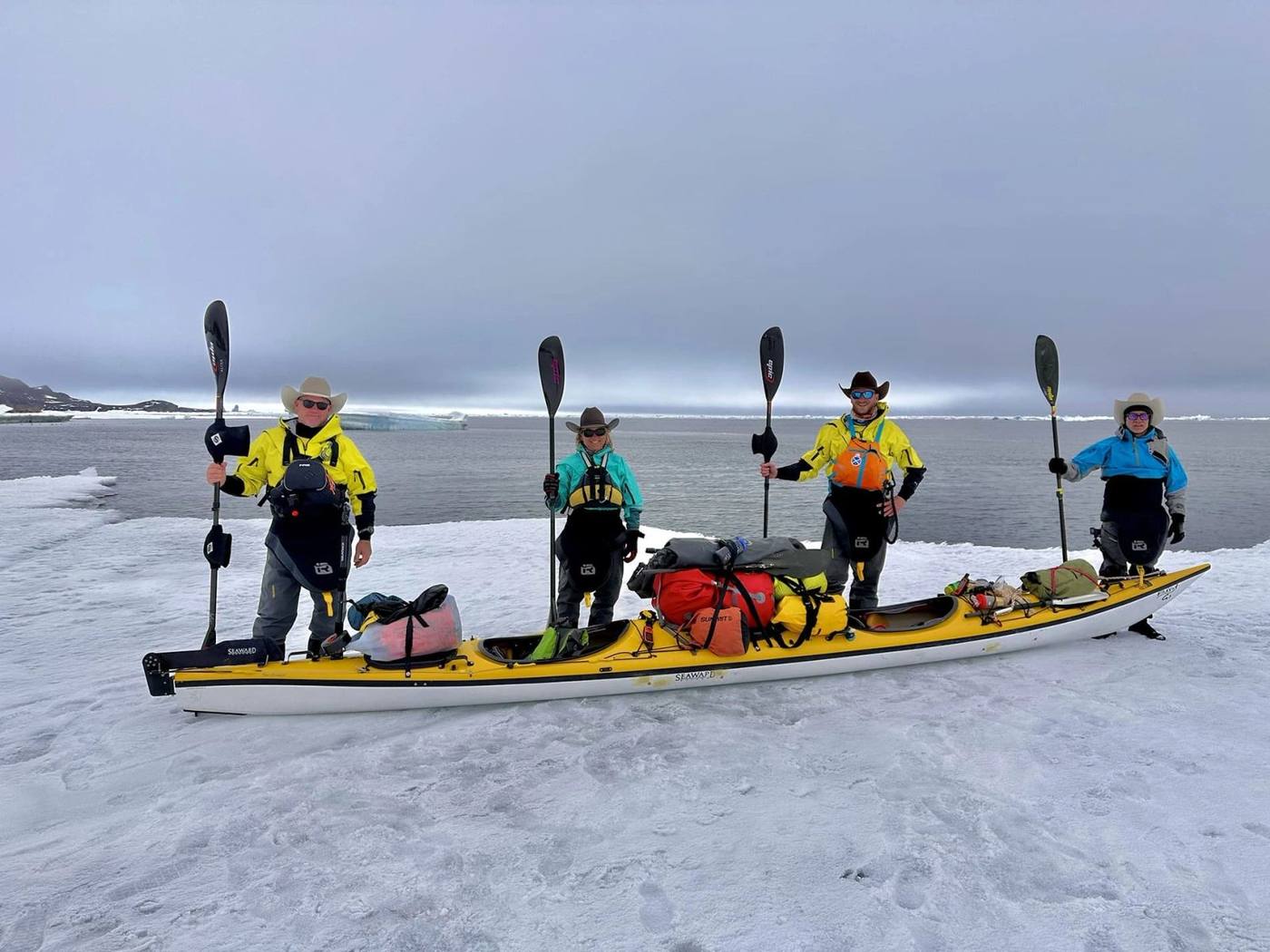 Preparing to kayak the Northwest Passage.
Building resilience in teams
Strategy 1: Encourage Open Communication
Psychologists say there are 7 Cs of resilience. One of them is Connection - I often think it would be better described as community.
You are more likely to feel resilient if you have a supportive community.
That community starts with communication. Everyone needs to feel like their contribution will be taken seriously and implemented if it is worthy. And if it's not worthy, they need to know they wont be ridiculed for making the suggestion.
Create a culture of communication by:
- Leading by example - as a leader, be seen to listen, ask follow up questions, seek out opinions and be available for chats. Tone from the top is one of the most important parts of creating an open culture.
- Different communication avenues - some people might be comfortable offering their opinion in a group meeting, others might not. Some might even prefer to write it down. Make it clear that there are several equally valid ways to communicate.
- Praise - openly praise and reward communication.
- Social cohesion - take employees out for lunch, have some post work drinks, if there is an important sporting event on give everyone the time off to watch it together, do sweep stakes for the world cup, clock off early on Friday for some socializing. If there is a strong social cohesion, the task cohesion will benefit.
 We were constantly problem solving in the Arctic.
Strategy 2: Develop Problem-Solving Skills
Problem solving skills start as a problem solving mindset.
Another C of resilience is challenge - resilient people reframe unmanageable obstacles as solvable challenges. The idea of figuring out and overcoming the challenge is invigorating. They rise to the challenge and thrive.
Facilitate this mindset by coming up with a list of questions. Simply asking the right question can get the ball rolling. For example:
- How can I....?
- How would we define success?
- What part of this problem is similar to something we've solved before?
- What is within my control?
- If I asked someone more experienced, what would they advise me to do?
- What would make this worse?
Irrespective of the answers, the next step is to focus on low hanging fruit. It can be unhelpful and overwhelming to try and solve it all at once. Resilient people focus on what they can control (another C), and low hanging fruit is within your control. One easy win after another can snowball to the whole solution, by raising more answerable questions that weren't obvious until the first part had been sorted.
Strategy 3: Promote a Growth Mindset
A growth mindset is the belief that your abilities, skills and capacities can be improved over time. It contrasts with a fixed mindset, which is the belief that your ability is static and innate, and therefore will not improve or get worse, irrespective of your actions.
A growth mindset is a self-fulfilling prophecy. If you believe you can improve, you will invest time and energy in yourself and lo and behold, you will see results.
You can cultivate a growth mindset, which will lead to resilience, in a number of ways:
- Encourage new ideas and do no punish failure. Say, "well, it was a good idea that didn't work out this time" and people will feel empowered to try more experimental ideas in the future
- Reframe failures - talk about the silver linings, praise the effort not the outcome, discuss what you can do differently next time. All of these will lead to a growth mindset and a better ability to deal with setbacks (which is, in essence, resilience)
- Talk about it - openly engage in discussions about your team's potential, about a growth mindset, about how far they've already come.
- Language - a lot of the above comes down to language. How you talk about something is powerful. Talk about the effort, the joy of trying something new, the lessons for next time, praise new ideas and not outcomes. It all adds up. It's similar to 'reframing failures' but extends beyond just setbacks.
Strategy 4: Set Clear Goals and Expectations
Resilience is informed by how you perceive yourself. If you are constantly failing to reach goals, it can become hard to believe in yourself and your resilience evaporates. If you are cruising to all your goals, it is not very engaging. If you have no idea what your goals are, it can be hard to feel a sense of common purpose and your group resilience disappears too.
Clearly defining your goals will improve resilience.
Strategy 5: Lead by Example
Leadership and resilience are inextricably linked. I've mentioned tone from the top already but it is so important, it deserves its own sub-head. If you say all the right things, have company values pinned up in the office that say 'communication' and 'never be afraid to fail' and yet, you don't communicate, do not value ideas over outcomes, are hard to reach and don't set clear goals, your company values are not worth the paper they are written on.
Leaders that facilitate resilience:
- Praise effort and innovation over outcome
- Encourage critical feedback without being negative - not "what went wrong". Instead "what went well despite the outcome", "what can we do better next time"
- They actively listen and engage in conversations with their staff
- They are open to criticism and turn it into a positive learning experience, to set the tone that not all setbacks are negative
Ready transform your teams resilience?
Get in touch about a keynote talk or workshop today. I have transformed countless teams, working with brans like Heineken, M&S and Bosch.
My talks are packed with exciting tales of polar bears, sea ice and near death experiences, along with applicable lessons in resilience & teamwork.